Sorry @gimp if I missed this, but did you clean your barrel at all during this process?

Printable View
Sorry @gimp if I missed this, but did you clean your barrel at all during this process?
Quote:
Originally Posted by caberslash
No, started with a fouled barrel (about 10rd down it) and did not clean during
Any degradation in precision due to fouling would be held equal across both loads as they were shot alternately.
The sequence of shots from each 20rd group didn't indicate any degradation of precision towards the last shots - the last 5 from each load went through the centre of the groups somewhere and were not the outliers.
Prior testing and other information indicates that barrel fouling isn't a practical issue for precision for hundreds of rounds
Quote:
Originally Posted by Sidetrack
Common sense still applies. If you find yourself experiencing pressure signs, reduce the load.
Ignore this, can’t seem to edit. GPM raised the 260 load data issue and you’re gone part way to explaining your thinking. The chamber differences still bug me but if they’re still within tolerances can we assume we’re still ok? I ask this as I was getting bolt lift issues at the bottom end of powder charge when loading for my 270. It was my first handload so I was being conservative but it stuck with me, hence the questions.Quote:
Originally Posted by Sidetrack
I load 10 shots, each at an increment that is approximately 1% of the total weight (eg loads between 45 and 55 gr ill load at 0.5 etc) usually towards the top end of the load range then put them over the magneto, usually i get 2 flat spots in velocity, 1 at the low end 1 at then i load 5 in the middle of the faster flat spot if safe, and check it and that's the end of it. this is for long range ammo though and most of the time this works fine for me, only a couple of occasions ive had to tweak the load beyond this. and before i do anything i check max cbto, and then pick a jump, this always works except with berger VLD's that can be fussy at times. Im talking long range as in shooting deer out to say 800 yards or so with calibers like, 6.5cm. 270. 308. 300wm etc. not F class
for hunting out to say 200-300 yards (mostly under 200), i dont care just pick a cheap bullet, chuck a load in the middle of the load range through my powder dropper, load a few 100, and go hunt. my tikka groups these loads well under 1moa too, even if i mix bullets and bullet weights lol. honetly i have a mix of 150s and 180s in the mag sometimes lol and they shoot same place
For nice groups, setting your rifle up properly form a harmonic repeatability perspective will result in just about anything grouping well at 100 yards. ES is all i care about when load testing
Even my mossberg patriot, as as well as Mossberg ATR shot every bit as well as any of my expensive rifles after i set them up right.
Some general notes on what i do
Dry tumble
Anneal
FL size and deprime (bump shoulders 1 thou)
Trim
Chamfer
Deburr
Brush inside of necks
(i dont clean primer pockets)
Seat primers
load powder
Seat bullet
"pressure signs" on brass are very difficult to interpret consistently. Many things can create these signs - the hardness/quality of the brass, the sizing/headspace of the ammunition, etc. Some factory ammunition will show ejector marks or sticky bolt lift in some firearms. This .260 in this thread had sticky bolt lift and ejector marks with some rando factory 120gr Federal Fusion ammo I had that I used to get a rough zero.
While these signs may indicate a chamber pressure that is over SAAMI max, they also may not.
You can minimise your chances of experiencing problems by using quality brass, following a good reloading process (e.g. measuring and setting up your FL die for minimal shoulder bump) and thoroughly researching data before loading. Velocity is the best indicator of pressure - if you are getting more velocity than a reasonable estimate based on book max values corrected for your barrel length, you should reduce your load.
There is a reasonable practical safety margin between SAAMI max chamber pressure and the point at which brass will fail, and then higher again - the point at which it will be a problem. This doesn't mean we should eat into that safety margin, it just means that if you find yourself a little over SAAMI max due to variances, you won't die.
If you get indications of excessive pressure with any loading approach, reduce the load.
Well this is entirely another topic starting entirely.
I'll start by saying I think the methods of detecting pressure (or more accurately "over pressure") that we all read about are just about as reliable as the load development methods we read about..
I think knowing your rifle goes a long way
2 examples i have in my safe, my 270 Tikka is very slow and even at max book load i am well under max velocity (like 300fps), so my load for it is i think 4 gr over book max to get a decent velocity
but then i have a 308 tikka (this one has a 20" custom barrel with a tight chamber) and even with the "slow" 150gr sako softpoints i get nearly 2900fps (think 2880) which is probably on the top end of the pressures and with my 155gr handloads i think i max out at 45.8gr 2208 which is well below book max whereas my mates factory tikka i can go to 48gr 2208 and a 150 and its not causing issues.
Greeting @gimp and all,Quote:
Originally Posted by gimp
First I need to say that I have little faith in "pressure signs" in guessing pressure. I went well down the rabbit hole on this one at one stage but no longer. Most have been pretty well debunked so the answer to method 1 is no.
Charge, velocity and pressure are all quite linear within the normal pressure ranges so I mostly work up to velocity rather than charge weight. Data for most modern cartridges is pretty good with the odd exception and it is rare to find recorded velocities that vary much from the book data. For cartridges like the 6.5x55 and 6.5-06 data is all over the place and a bit more finesse is required. About 5 years ago I got serious about working up a decent load for my new Tikka 6.5x55. Possible velocity in a calibre increases at about 1/4 of case capacity so I spent some time measuring net case capacities and calculating a max velocity at normal pressure for the 129 grain SST by comparison with other cartridges including the .260.
So I used a calculated max velocity to work up to rather than the charge. Slightly different than your method 2. The .260 is loaded to a slightly lower pressure than some other modern cartridges so there is a little more headroom there than some other cartridges.
One thing I have discovered is that some heavy jacket cartridges like the LRAB push both velocity and pressure up from their thinner skinned brethren. In the 6.5-06 a change from the Hornady 129 grain Interlock to the Nosler 129 grain LRAB pushed velocity up by 100 fps, equivalent to adding around 2 grains of powder.
Regards Grandpamac.
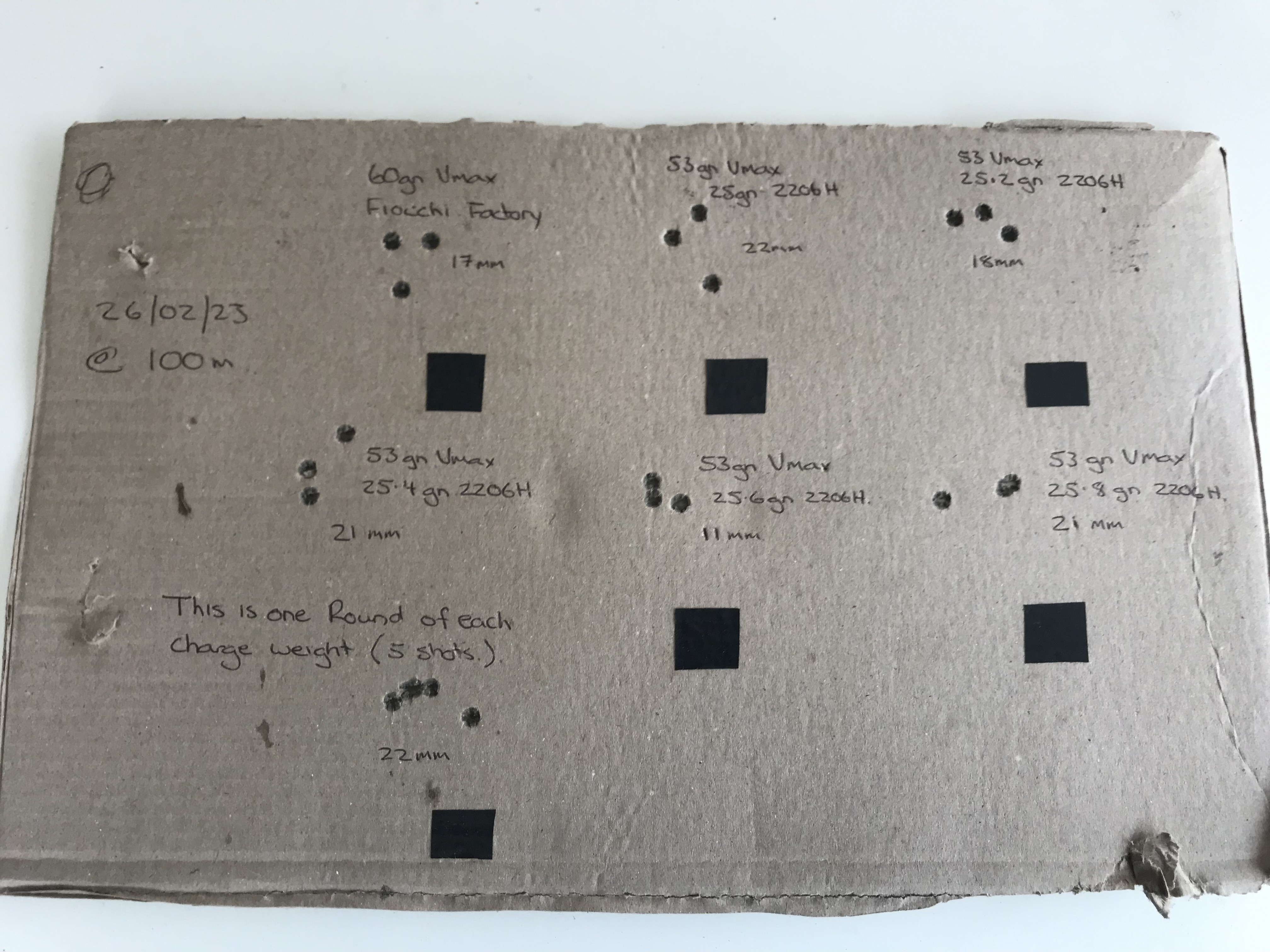
After reading through the recent post my memory was triggered about some basic load development I did with my .223 .
I looked back through my photos and found this target .
If you look at the bottom left target/ group, it was a 5 shot group of one round of each powder charge .
The result wasn’t to far removed from the other powder charge specific groups and when you consider that it was a 5 shot group and the others were 3 then it kind of goes along with the whole “ noise “ thing of load development.
Attachment 254050
For those interested in understanding further whether the testing methodology is valid -
Does shooting 20 round groups allow us to see and measure differences in precision?
Here is an example from a more precise rifle, with 2 loads that DO demonstrate a statistically significant difference in precision.
This is a 20 round group with handloads using the 80gr Targex (incidentally a load randomly selected using the approach described in post 1).
The shooting methodology was - prone, bipod & rear bag, short break between each 5rd group. The mean radius is 0.71cm.
Wind was light (<1ms).
Attachment 254067
Next we have a 20 round group with Hornady 55gr SP "training ammo".
The shooting methodology was the same, conditions more or less the same.
The mean radius is 1.18cm.
Attachment 254073
I have photos, for each of these groups, of each of the 4x rd groups that makes up the larger 20rd group. In neither case did the last shots "blow it out"; adding more shots over time simply fills in a better picture as you go.
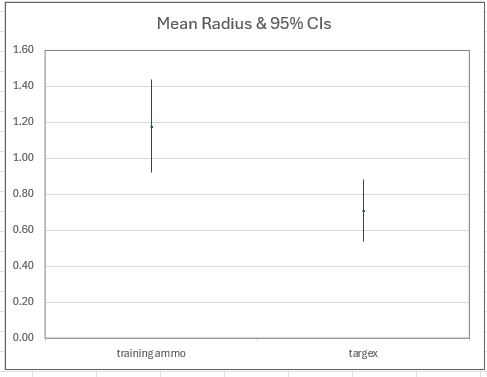
These groups represent a reasonable picture of the precision of the system with these loads. Even with 20rd the statistical power is limited - in the world of statistics, 20 samples is a small amount when you are trying to detect small differences between means with relatively large standard deviations. However with 20rd groups and the difference in mean between these loads we do have power to detect the difference, and it is a significant difference at the 95% confidence level.
Attachment 254069
(groups are .9 vs 1.6 MOA)
Either of those is of course a wonderful hunting load, from a precision perspective, and now I have a lot of information about where the zero for the 55gr is, and a really accurate average speed to use for ballistics.
On pressure: I think if there is concern about the safety of the data due to uncertainty or variation, then a single shot ladder at reasonable charge weight spacings (e.g. 1gr) shot for a rough idea of velocity and pressure should help inform the loader, then follow up with a 10rd group at the charge weight area selected to give the required velocity to establish an idea of precision and a good average velocity.
Have no idea of the basis for your statement. Can you expand please.Quote:
Originally Posted by STC
Bloody hell! Detailed and interesting! Thanks!
The more you know the less you know.
That is reloading!
Sent from my SM-A556E using Tapatalk
Applies to pretty much everything eh.Quote:
Originally Posted by andyanimal31
Two 270s get loaded for from my bench.one is near top of book load,the other sits between start and midpoint. No way would I load for the second rifle and hotter. Possible a short throat/ jump till pill hits rifling is the difference. If you look at Weatherby rifles of old( not sure of new ones) they had quite a spacewalk for projectiles which allowed a longer burn and higher charge perhaps? The new hypersonic shotgun rounds work on similar principle. By allowing payload to start moving forward it sort of increases the volume of the case....hopefully that makes sense??? It's why seating deep increases pressure,smaller volume.Quote:
Originally Posted by Sidetrack
@gimp I don't doubt your results but out of interest.Quote:
Originally Posted by gimp
Questions;
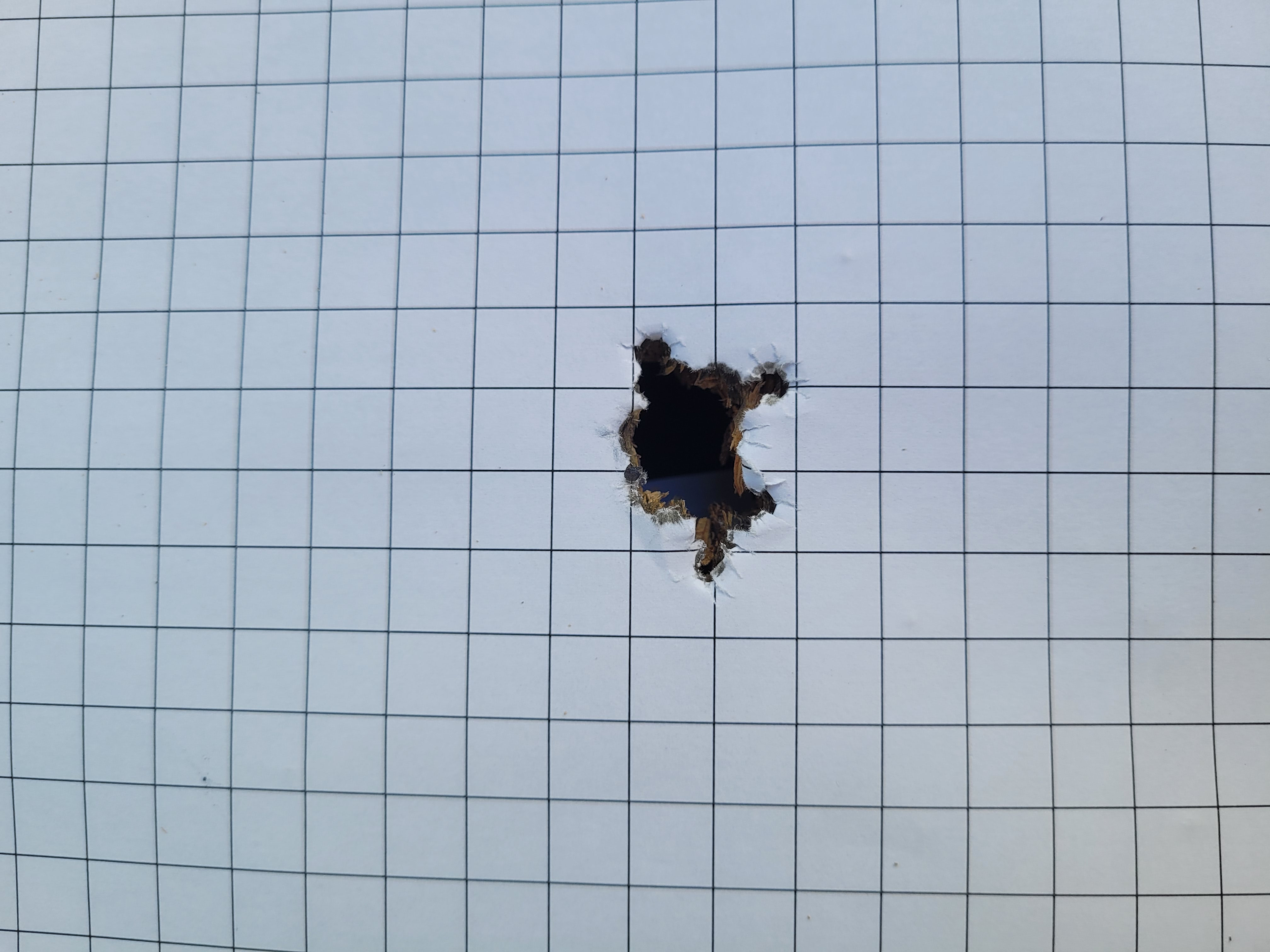
How were you able to determine the location of each shot to obtain each shot location and radius? Looks difficult to do for the targex group unless this is was a group derived from multiple overlapping targets.
To assess significance are you visually comparing mean radius and 95% CI error bars or running a statistical test?
Are you able to provide standard deviations or raw data? I'd be interested in having a play and work out statistical power and effect size to give us an estimate of what your sample size would have to be to confidently detect a group that is over 50% bigger than another? I suspect very few shots when the difference is >50%. I do warn though that detecting the difference between two groups is different from understanding the precision of a single load.
The targex group I have the 4x 5rd component groups available on separate targets (that were precisely overlaid over the 1 that contains the composite group) allowing me to precisely measure X & Y for each shot. I have then corrected X/Y by the MPOI offset from point of aim to obtain radii from MPOI.Quote:
Originally Posted by Makros
The standard deviation for the mean radius of the targex load is 0.38cm and the SD for the hornady load mean radius is .58
a T test (paired, 2 tailed) in excel gives me .002 for the Targex vs Hornady and .53 for the 2 .260 loads - it's clearer visually to show the CIs overlapping for the audience
Happy to share raw data - I'm not an expert statistician by any means and peer-review of my work is always welcome
Gotta like science and scientists - bloody useful when they are doing such practical shit!
Funnily enough, with these SD for each group, for an 80% power (80/100 times you test you will detect the statistically significant difference in mean group radius and reject the null hypothesis they are the same), you need at minimum 19 shot groups.
This is rather revealing when one group is 77% bigger and has a 66% larger mean radius than the other, it still takes at least 19 shots to be sure they're different, because of the quite large variance (SD) of the samples.
Just playing here:
Assuming consistent SD of group 1 = 0.38cm and SD of group 2 = 0.58. Required sample size to detect a few differences in mean radius are below.
0.1cm difference in mean radius = 379 shot groups
0.2cm = 96
0.3cm = 44
0.4cm = 25
0.5cm = 17
0.6cm = 12
0.7cm = 9
0.8cm = 8
0.9cm = 6
1.0cm = 6
1.1cm = 5
.
.
.
1.6cm = 3
Post script; nothing wrong with your stats assuming you're picking the t-test for unequal variances. It's the appropriate test.
Also, nothing wrong with your stats assuming you're picking the t-test for unequal variances. It's the appropriate test. Also I'm not an expert statistician but use enough of these sort of tests in my field that I can do this without running to an actual statistician. Agree with the visual depiction of the 95% CIs means more to most and arguably are more meaningful that a statistical test to derive a p-value.
Despite me providing some samples sizes you would need to detect "statistically significant" difference between groups of different sizes. This is mostly an incorrect usage of p-values and power and is borderline meaningless other than an academic curiosity.
I warn that the importance of statistical significance should be tempered with an understanding of the data and what a statistical test, and p-value means (note it's not actually what was taught in high school textbooks, nor many a 101 stats textbook).
Also the fact that "significance" when we're talking stats doesn't mean "meaningful or important" nor my result is "correct".
It's a bloody hard concept to understand and I'm not certain I understand p-values fully. However, If you are interested in understanding it more and learning how misunderstood and how pervasive the incorrect usage of p-values is I would suggest reading the 13 misconceptions about p values here: https://www.ohri.ca/newsroom/seminar...03,%202014.pdf
And the delightfully named paper: The insignificance of statistical significance testing: https://core.ac.uk/download/pdf/188120111.pdf
Or a simple run down here: https://en.wikipedia.org/wiki/Misuse_of_p-values
In short make decisions on the observed effect, it is the most meaningful thing in your data. But understand with less samples the observed effect may be an extreme result on the basis of chance because of the variability of the data.
Do not dismiss results because they are not "significantly different" nor should you accept results simply because they are "significant".
From a practical perspective it becomes impractical to assess the difference between loads sensibly, hence my approach that it is best to take the shortest route to find one where you can have high confidence that it meets your requirements, and move on.
From another practical perspective the question is "when buying a rifle, how do I assess the actual quality of the barrel" because marketing hype aside, barrels do vary in quality.
Wether it's a modestly priced factory rifle like a Tikka, expensive factory like a Sako, or custom like a Trueflite or Bartelin, you'd generally expect to get what you pay for (the occasional complete dud that any manufacturing can produce from time to time accepted).
The fact that this statistical approach better informs us of a barrels accuracy (versus the old "you need to tune the load to the barrel and them I can rely on poor statistical analysis to provide a warranty/guarantee of sub MOA or whatever) might provide some challenges to gunmakers if it catches on.
This has so far been one of the more useful recent threads on here :thumbsup:
Gotta love gun nerds!! It certainly has been enlightening and given this has been bandied about in the gun world for years, good on Hornady for expending the barrels and ammo to shed some real data on the subject (and, of course, our posters as well) Back tracking this on the interweb, I found that as far back as the 1800’s, ten shot groups were the norm to average out accuracy, then slowly devolved to smaller and smaller lots over the decades. I’m sure there was some logical reasoning behind it.
It’s certainly been fascinating, thank you.
@gimp thank you for spending your money and time to bring us this data. As well as other the other data in recent related threads. It is extremely interesting.
I have listened to Hornady #50 podcast, will be also take in the follow up #52 podcast.
All of this explains a lot of personal observations of variability in my ( usually 3 shot ) groups. I also realize I've wasted soooo much time and ammo on "a couple of clicks" when sighting/checking zero using 3 shot groups and looking for differences group size based on small changes in powder weight.
I get a hint of confirmation bias in the initial abstract.
[QUOTE]. Go back to the range, shoot again, start trying to "fine tune" when the confirmation loads do not meet the same level of performance as the initial test
/QUOTE]
I would ask what happens when the confirmation loads do meet the initial test? I get the feeling the author is perhaps holding the idea that the initial test is the best group in the ladder. When speaking as a hunter reloader, the initial test is a group that meets the standard required. Which is I think something you will agree on.
So my process is to load up a ladder from somewhere above book minimum- because I know my rifle and load- and shoot till I approach book max. If all groups in the ladder are under my required standard of 1.25 -1.5 moa approx then I will simply choose the one that gives me the velocity im after with the least powder and im done.
If none or many are not achieving the standard I want then I will try a different projectile. If that does not work then I will replace the gun.
Brilliant insight into the realm of statistics there!Quote:
Originally Posted by Makros
Just shows it is ridiculous for the average shooter to bother being statistically confident in their load.
This is the reason why I'll stick to my load development techniques which are only 3-5shot groups, followed by multiple (different shooting sessions) 3-5 shot groups of whatever load I think has the best potential.
If they look good and sd's are acceptable, then I'll have confidence in the load/rifle. This will lead to confident shooting which is a major factor on the hill hunting or gong shooting.
The simplified approach. Same rifle 2209 147ELDM. Why? Better bullet, likely to actually be used from this rifle.
10 rd at 100m - acceptable for requirements. Speed 2600 avg as expected based on book data. .3 up .3 left to zero. SD fine as you expect with quality components.
Attachment 254203
3 at 300
Attachment 254204
3 at 400
Attachment 254205
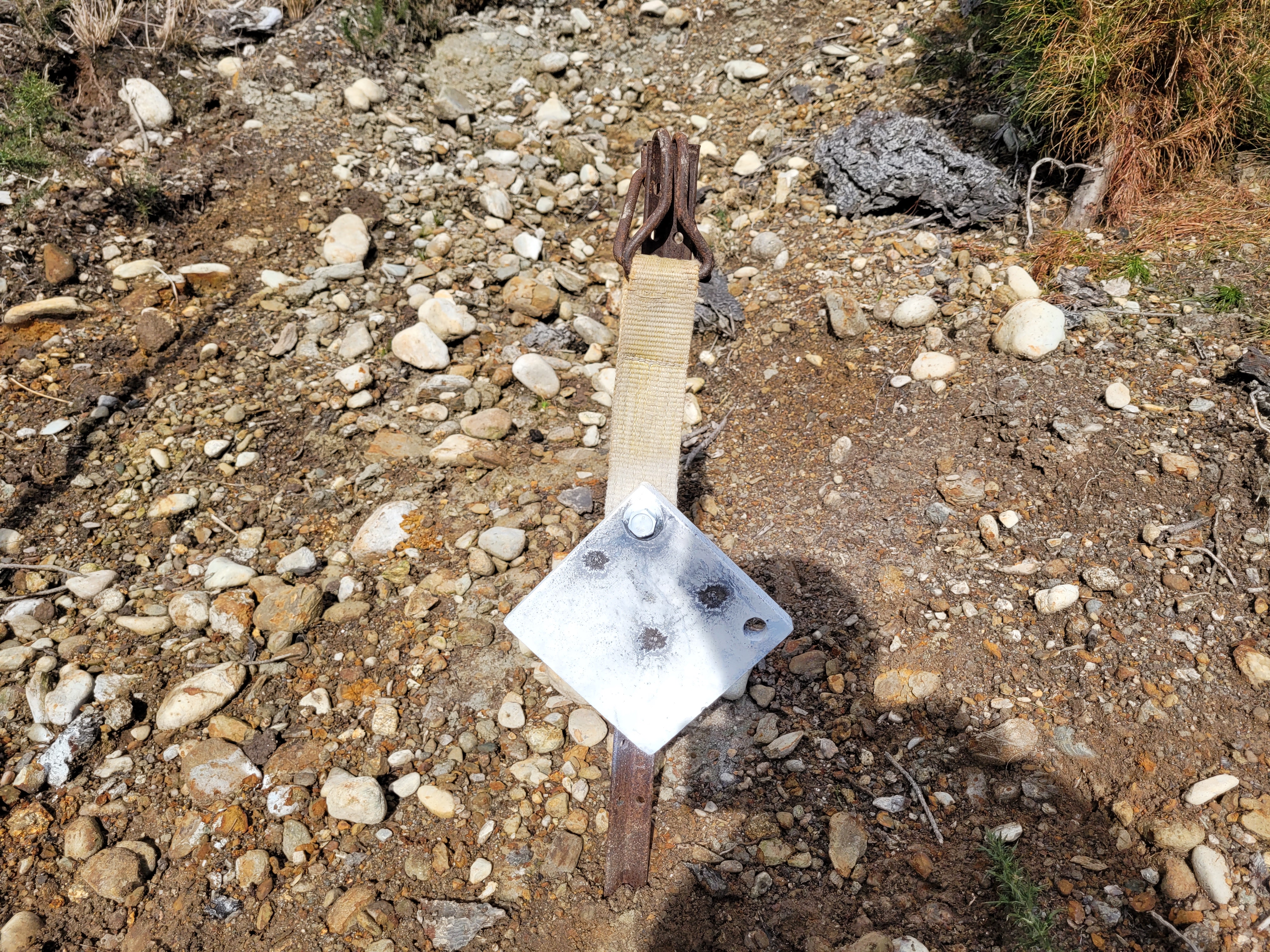
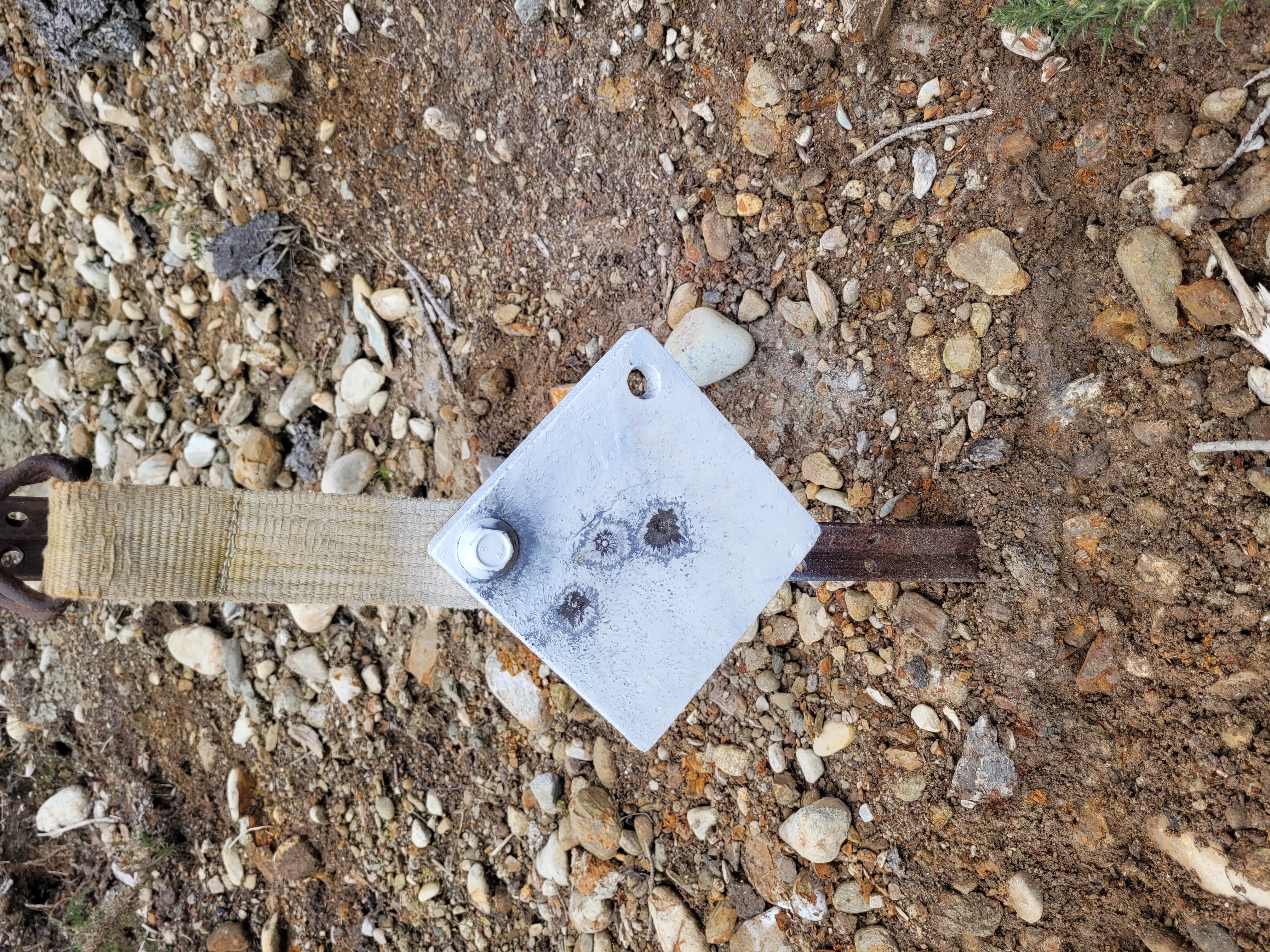
At 500 (+) my hit probability is definitely dropping off on this small plate
Attachment 254206
I left home about 12, just got back. Load sorted
I sort of agree with STC.
I used to do load development. Nowadays I just load the max load with a decent bullet and if it doesnt lock the bolt up and the velocity is acceptable and it will shoot into an inch and a half, I am happy.
I dont see any difference between your approach and mine; although I produce less graphs.:D
What’s the barrel length of your 260 @gimp? I’ve got a model7 & 260 factory bbl that will be off to gunsmith shortly. Thinking to go 18in.
This rifle is something like 18-19 inches, I don't recall exactly
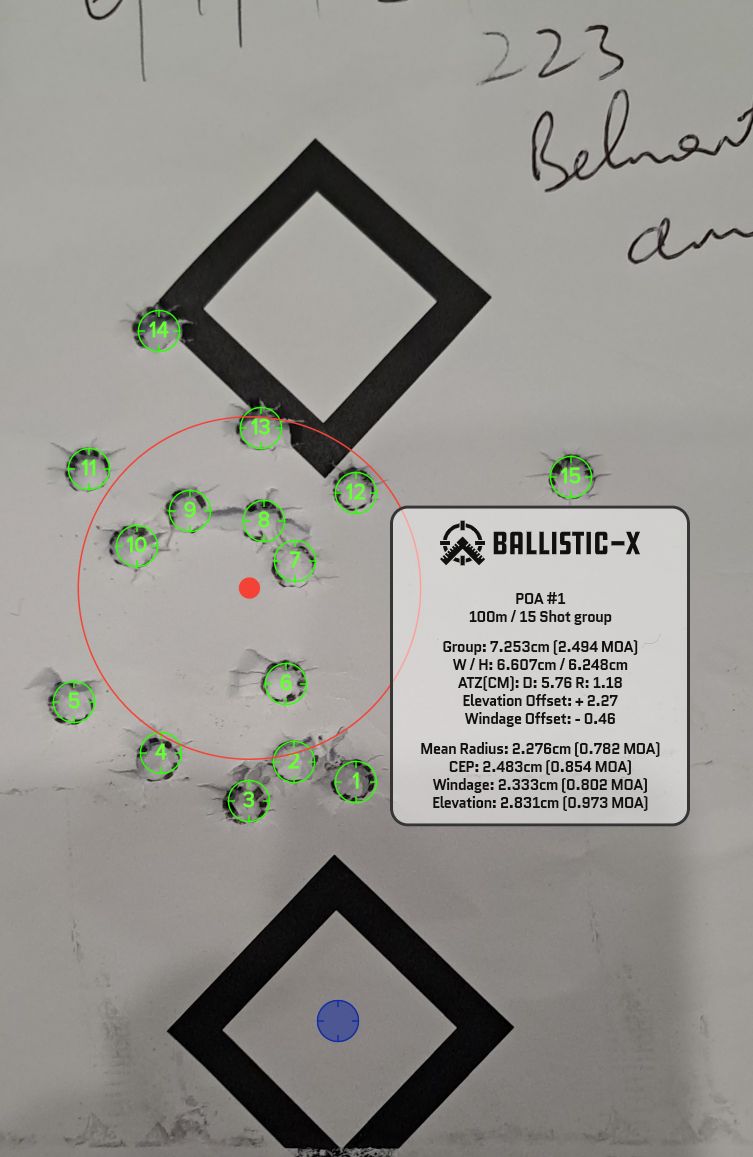
Sometimes you just have to use what is at hand. Some time ago I bought 300 rounds of Belmont 62 gn 223. Ive tried it in several rifles and none would shoot it well.
Today I was reviewing these last few "accuracy" threads and realized (Im probably a slow learner, beg your pardon in this is nothing new) maybe I could improve it.
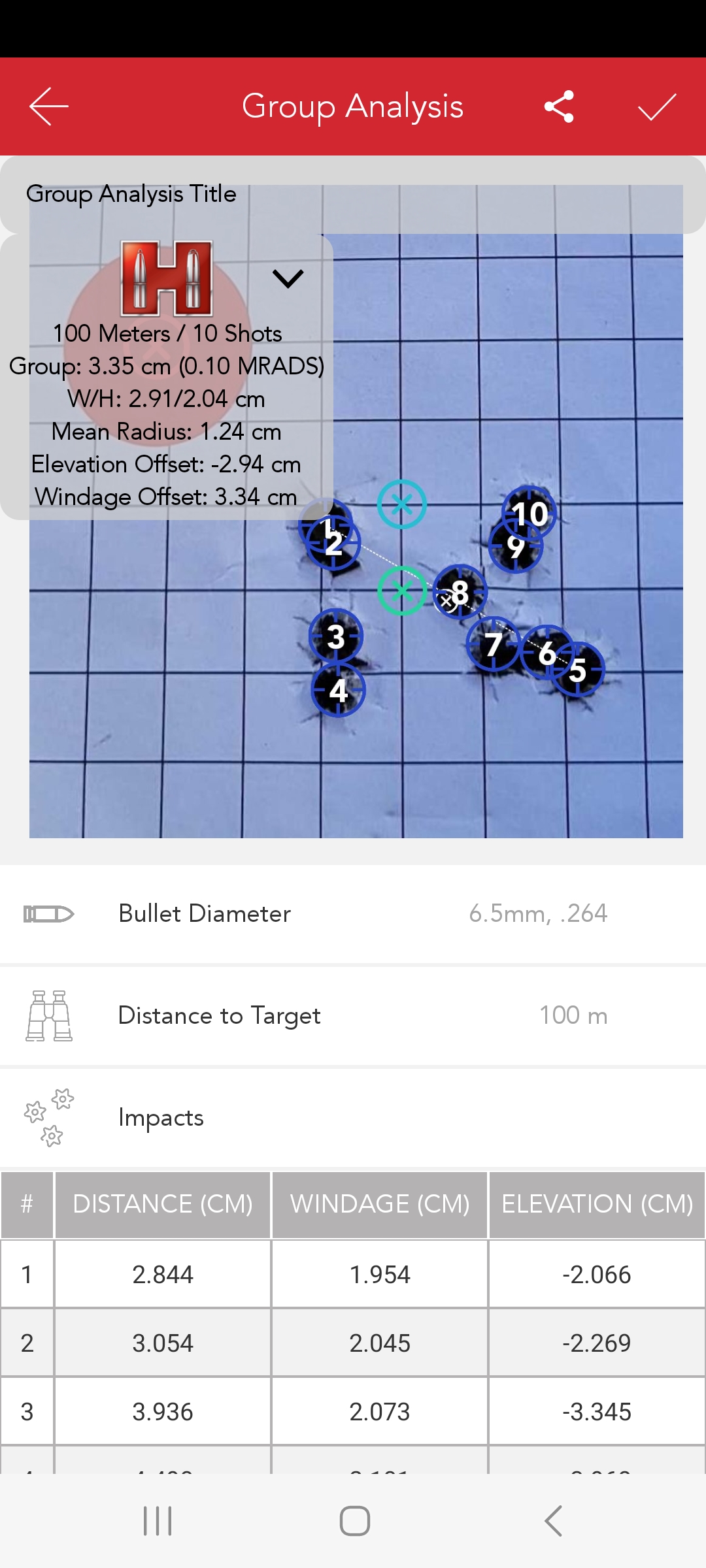
Using the analysis tools to look at larger sample sizes I thought - maybe I can make this ammo usable. So I shot 3 groups of 5 shots on top of each other.
Then using BallisticX (but any of them will do the job) I analyzed the very average "group" and used its recommended offset to adjust the scope.
The result should be a very precise zero. This precise zero "improves" the ability of the combo to place shots on targets (fir this ammo, Wallabies and goats) at reasonable distances.
So the ammo is not wasted afterall.
Attachment 254237
Cheers
PS - bloody good shooting Gimp, well done!
Is that numbering in order of shots fired? If so I think you actually have something weird going on as it’s pretty clear the groups are walking up the page
Nope. I just analysed them up the groupQuote:
Originally Posted by PerazziSC3
I'm a slow learner as well...but now I see it...good post, great conversation.Quote:
Originally Posted by Tentman
That's the hunting accuracy that's been talked about so much. Don't really have an excuse for missing much at conventional ranges with thatQuote:
Originally Posted by Tentman
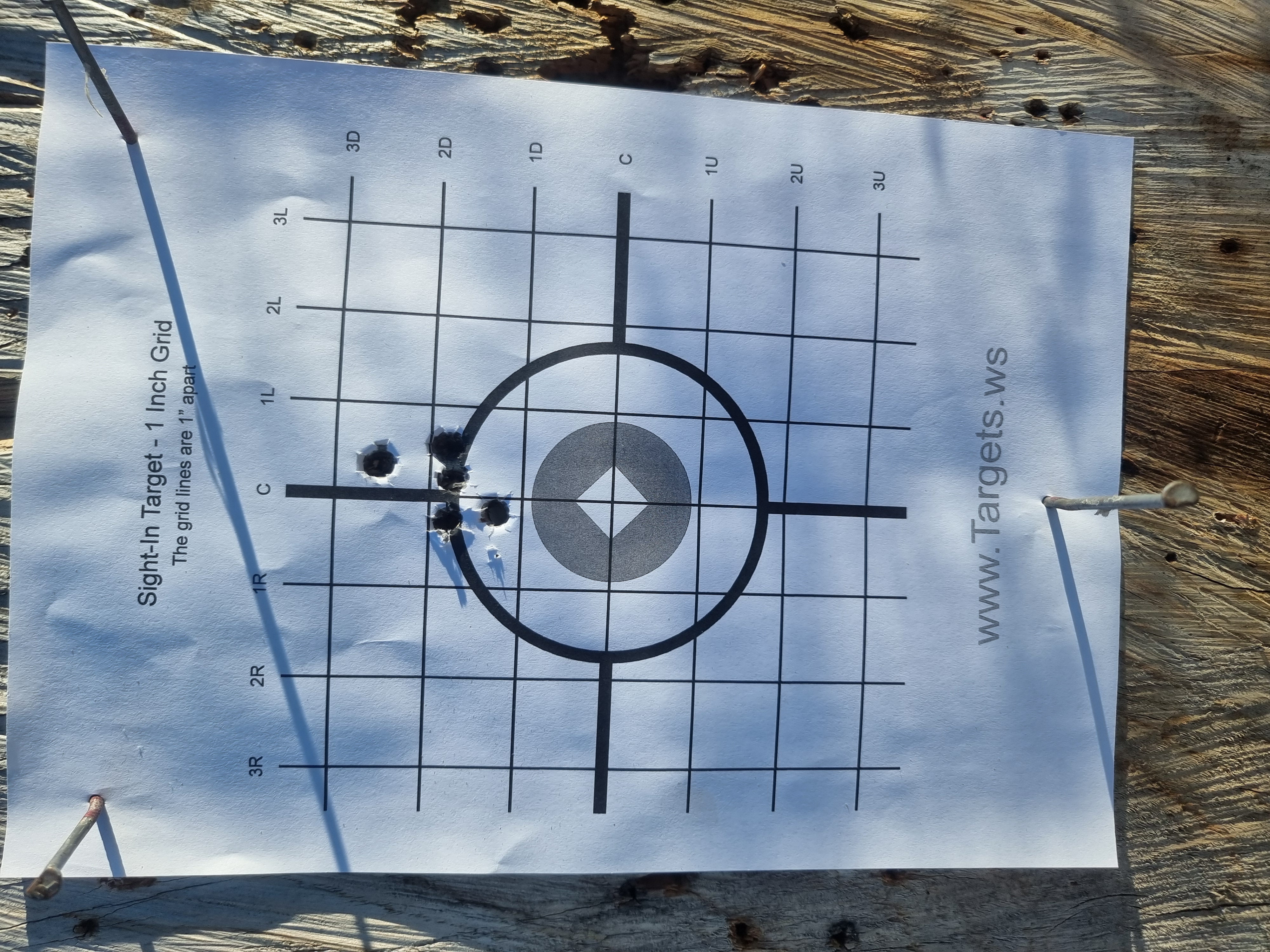
Had a crack at a 20 round group to get a better idea of my true zero and accuracy.
Blued Howa 1500, 308win, 20" sporter barrel, hs precision stock, Element Optics 2-16×50HDLR, Nikko Stirling zero-lok rings.
Shooting 165gn speer btsp's over ADI2208 in Sako brass.
5 shots then 5 minute break to let things cool down
Attachment 254289
Second lot of 5 shots (10 in total) then 10 minutes cool down.
Attachment 254290
Third lot of 5 shots (15 in total) then 10 minutes cool down.
Attachment 254292
Forth lot of 5 (20 in total)
Attachment 254293
I had one flier out to the right on it's own in the 3rd lot of 5 shots, I 100% know I pulled it I was getting uncomfortable and my back was spasming. It doesn't really matter but just worth mentioning. It was the first round of my 3rd 5 shot string, I got up and stretched after that and drilled the next 4 rounds back into the main grouping. I'm not trying to kid anyone or myself one outlier doesn't ruin that group.
20 rounds shot prone off my bipod 1.6" inside edge to inside edge is still plenty good and gives me a very good indication of my true zero.
Just want to say thanks @gimp your journey has been very compelling for me as a reloader.
Not bad for a $500 Howa in a flashy stock :yaeh am not durnk: :cool: :D
100m or 100y? @dannyb